
Is the Past Holding you Back?

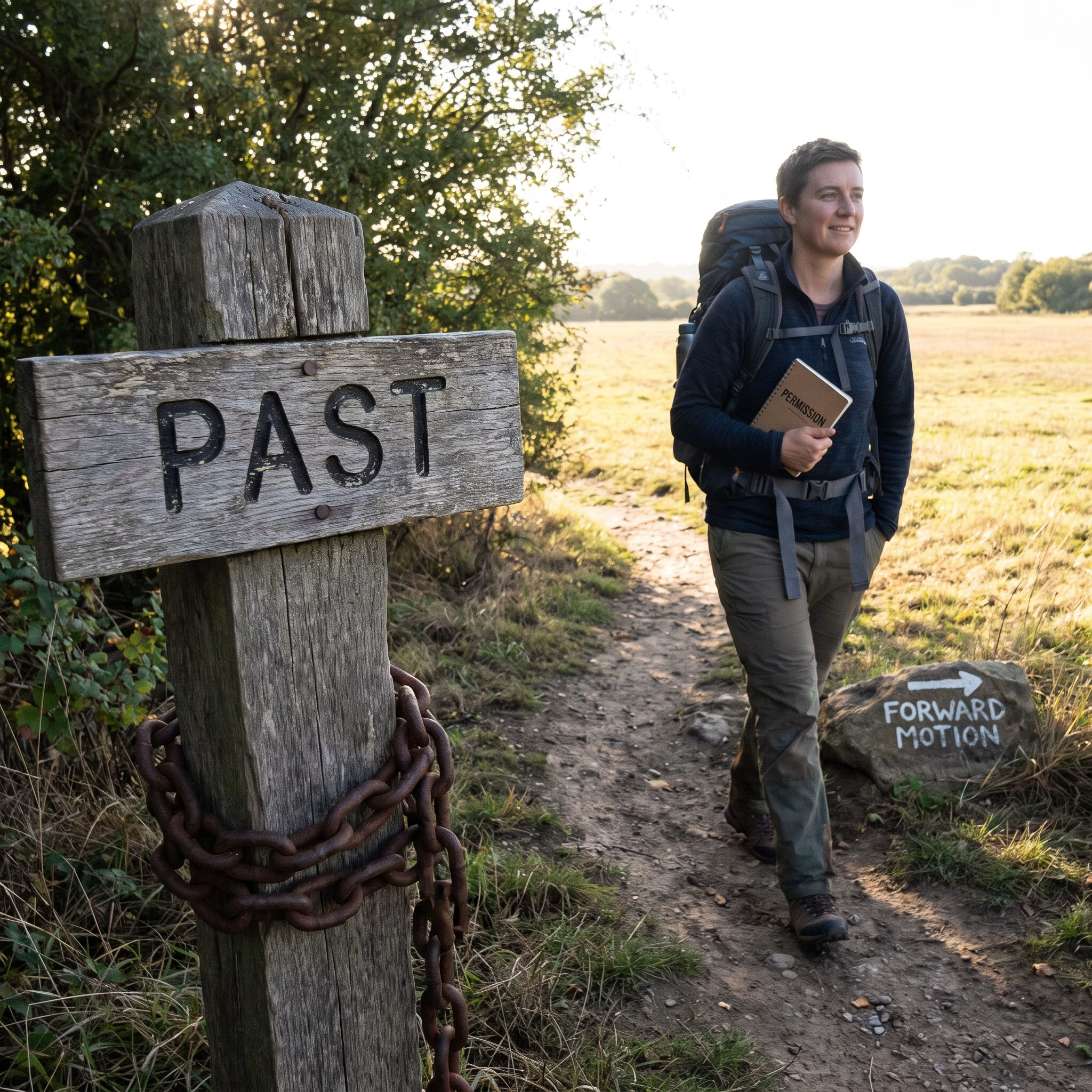
Permission, Perspective, and Forward Motion
There’s a quiet question many of us carry without naming it aloud: Is the past holding me back? It rarely arrives as a shout. More often, it slips in during the stillness of a evening coffee, the space between goals, or the familiar pang of “I should have known better.” What’s more, the past holds only the power you’ve allowed. And the first step to reclaiming your narrative is granting yourself permission to move forward, not because you’ve earned it through struggle, but because you are worthy of a story that feels light, expansive, and true.
Next, I’ve broken down the architecture of this shift into four encouraging subtotals. Then read each, hold what resonates, and leave the rest. Additionally, this isn’t about erasing what happened; it’s about choosing where you place your attention from this moment onward.
As a result, The Weight of Yesterday: Naming Without Shame. However, The Weight of Yesterday: Naming Without Shame
The past is a map, not a prison. It shows you where you’ve been, the terrain you’ve crossed, and the lessons etched into your skin. But too often, we treat the map as the destination, as if arriving at “what was” means we’re stuck there.
Acknowledge the lesson, not the verdict.
Every experience, even the painful ones, carried a seed of growth. Name the lesson, then consciously set the verdict aside.
To clarify, distinguish fact from story.
Moreover, facts are what happened. However, meanings we’ve layered on top become our stories. The story can be rewritten; the fact cannot be un done.
Give yourself permission to remember without reliving.
You can honour your history without letting it hijack your present. Permission is the hinge on which this door swings.
In my years crafting brand stories and personal narratives, I’ve learned that the most compelling tales aren’t those that deny the shadow, but those that illuminate how the protagonist chose to step into the light anyway.
2. Rewriting the Narrative: From “Then” to “Now”
We often live as if the past’s voice-over is the only soundtrack. “You always…” “You never…” “If only…” These internal scripts shape how we show up today. The encouraging Truth? You are the author, and every new day is a fresh chapter.
Pause the playback.
When an old story loops, simply notice it. Naming the thought (“There’s that ‘if only’ again”) creates a micro gap—a space where choice enters
.
Re frame the protagonist’s journey.
Instead of “I failed at X,” try “I attempted X, and I learned Y about how I work best.” The facts stay, the perspective shifts.
Visualise the future self.
Who is the person who has already moved past this? what do they notice? How do they speak to themselves? Let that version guide You present decisions.
Inspirational takeaway:
Joy isn’t the absence of past pain; it’s the presence of a new narrative that says, I am more than what happened to me.
3. The Architecture of Attention: Choosing What Focuses You
Neuroscience and ancient wisdom agree on one powerful point: neurons that fire together, wire together. If you spend hours replaying what went wrong, your brain becomes adept at spotting what’s wrong. The good news? The same wiring happens when you deliberately seek what’s working, what’s beautiful, what’s possible
.
Start with the small.
Notice the warmth of tea, the texture of a sentence you’re writing, the ease of a breath. These aren’t trivial; they’re the bricks you’re laying to rebuild your attention’s foundation.
Set a “permission alarm
.” Three times a day, pause and ask: “Am I focusing on what I want more of, or what I fear?” The answer isn’t judged—it’s simply observed, and you choose again.
Curate your input.
The stories we consume—social media, conversations, news—either add weight or lift us. Choose inputs that echo the future you’re building, not the past you’re escaping.
Words have weight. Swap a sentence that dwells on what’s lost for one that invites what’s possible. The right phrase, at the right moment, can rewire a mindset faster than years of silent endurance.
4. The Ripple of Forward Motion: You’re Not Alone
There’s a beautiful paradox in permission: it’s deeply personal, yet its effects ripple outward. When you stop holding the past like a heavy stone, you free up energy for connection, creation, and courage. And that energy? It doesn’t just benefit you. It lights up the people around you.
Share your permission.
Tell a trusted friend or colleague, “I’m choosing to move past X and focus on Y.” Speaking it aloud cements the shift.
Celebrate the small pivot. Did you notice a positive moment today?
Did you choose a new thought over an old one? Acknowledge it. Celebration is the glue that cements new neural pathways.
Trust the process isn’t linear.
Some days the past will whisper louder. That’s okay. permission isn’t a one time ticket; it’s a daily, gentle practice of returning to your own centre.
Inspirational close:
You were not meant to carry the past like a backpack permanently strapped to your chest. You were meant to carry its lessons like a compass—pointing you toward the direction of your own joy, resilience, and unwritten brilliance.
Final thought:
The past holds you back only as long as you keep inviting it to the driver’s seat. Today, grant yourself the radical permission to sit in the passenger seat, observe the road ahead, and steer with the confidence that you—yes, you—are already enough, exactly as you are, to write a chapter that feels like freedom.