A Guide to Whole Body Wellness through Sound

Today, most of us are facing stress, anxiety, poor sleep and emotional exhaustion. These have become common challenges in today’s fast-paced world. More people today seek natural, holistic wellness solutions, and two approaches. Sound Therapy NSW Sound Therapist have gained significant attention.
Both these therapies use sound to promote well-being; they differ in purpose, techniques, scientific application and expected outcomes.
If you are skeptical about Sound healing v/s sound therapy, which is better, the answer depends on your goals, emotional needs and whether you seek clinical treatment or holistic energy balancing.

What is Sound Therapy?
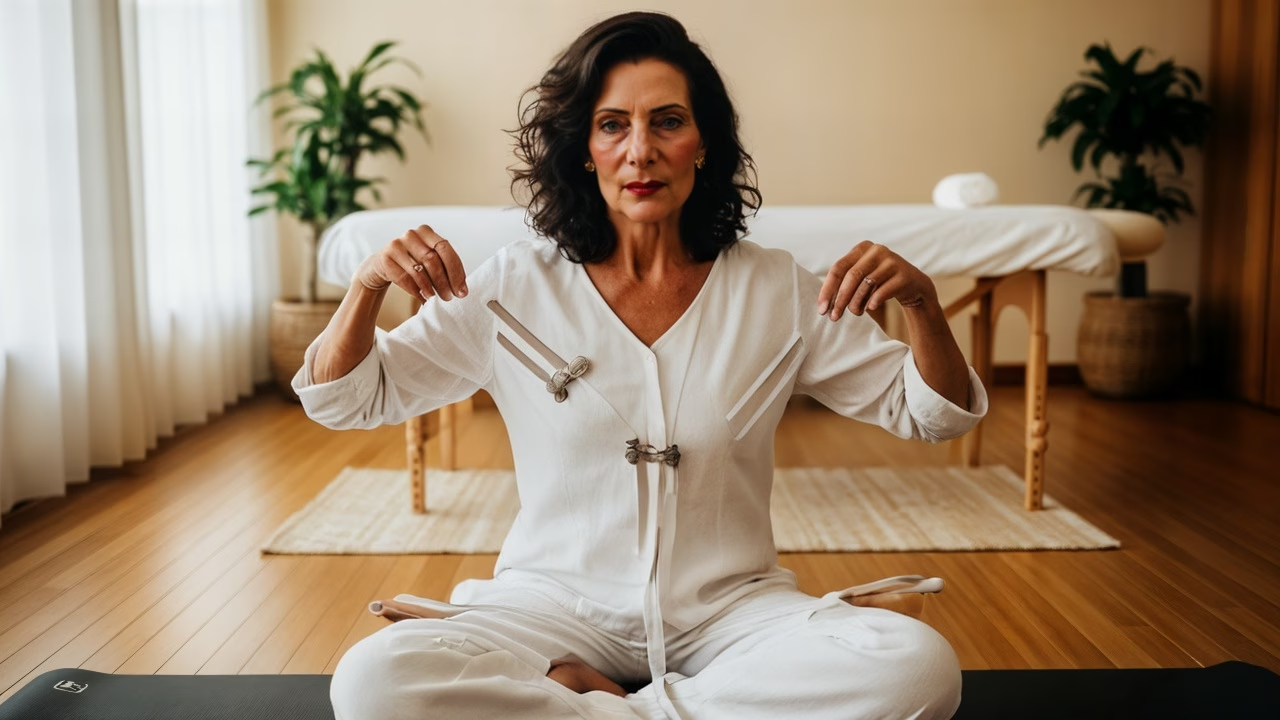
It is a holistic wellness practice that uses therapeutic vibrations, frequencies and resonant sounds to promote relaxation, emotional balance and energetic harmony. The therapist uses specified frequencies used instruments like singing bowls, tuning forks, gongs, crystal bowls, chimes and vocal toning to create frequencies believed to influence the body’s natural healing process.
Sound therapy aims to calm the nervous system, reduce stress, improve mindfulness and support overall emotional and spiritual well-being. After sound therapy sessions, many feel relaxed, mentally clear and emotionally lighter. Many individuals see sound healing as a supportive complement to medical or psychological treatment.
Are Sound Therapist Certified
Trained therapists use specific, individualized approaches to reach client’s goals. These goals include improving mental health, cognitive functioning, emotional regulation, and physical and pain rehabilitation.
The sound therapy sessions involve listening to tuning fork frequencies, singing bowls, , playing instruments, guided relaxation or movement.
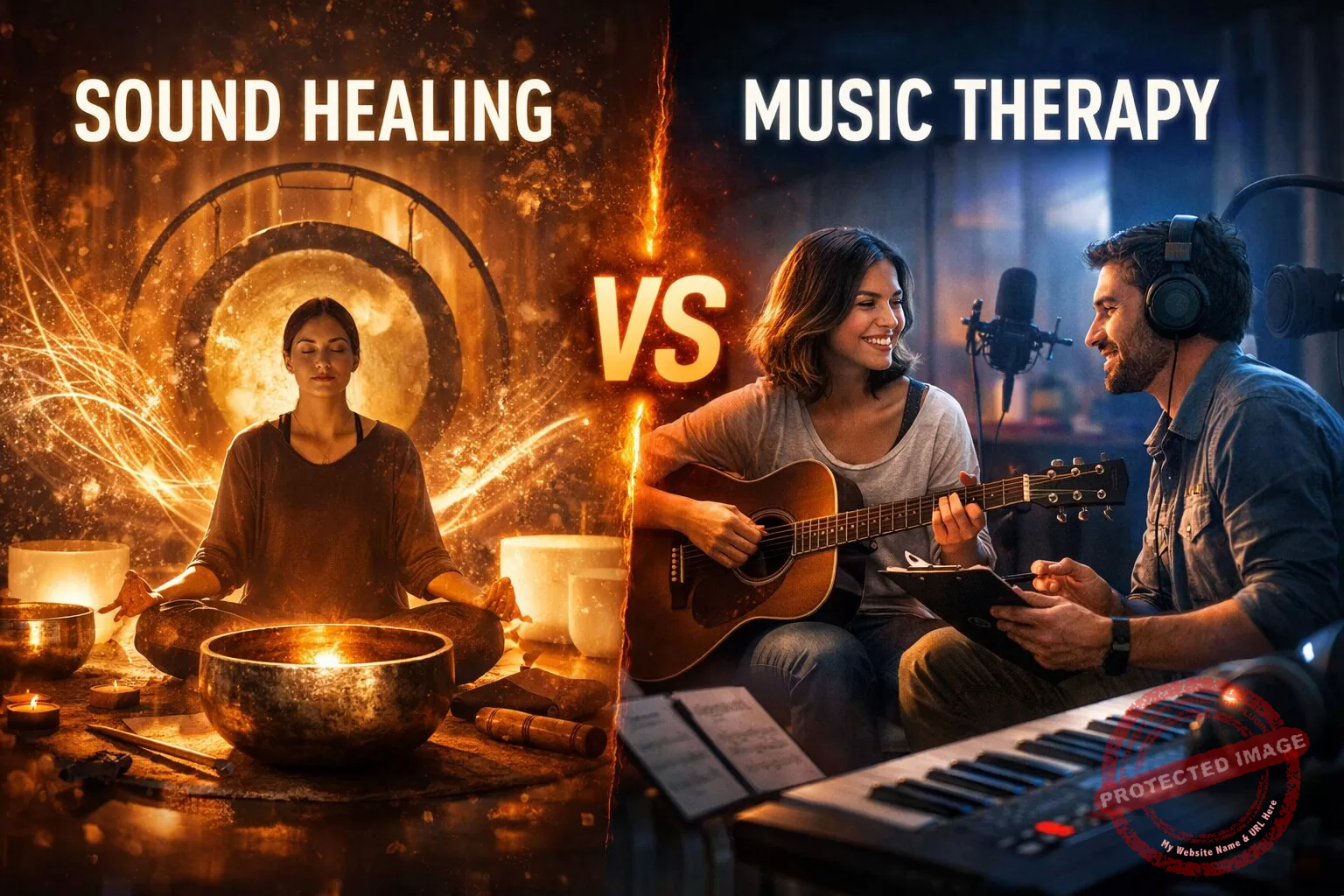
Sound Healing v/s Sound Therapy Differences.
Although both use sound to improve well-being, their approach, purpose and delivery are different.
-
- Purpose and Philosophy: Sound healing focuses on relaxation, energy balance, meditation and holistic wellness. Music therapy focuses on measurable clinical outcomes, emotional development, rehabilitation and psychological support under professional supervision.
-
- Techniques Used: Sound healing uses vibration instruments like crystal singing bowls, Tibetan bowls, gongs, tuning forks and vocal frequencies. Music therapy incorporates singing, instrument playing, movement and guided listening aligned to individual treatment goals.
Sound Healing V/s Sound Therapy: Which is Better?
-
- Sound healing v/s Music Therapy for Anxiety: Sound healing creates deep relaxation by slowing mental activity and encouraging mindfulness through calming frequencies. Music therapy helps individuals identify emotional triggers, regulate anxiety responses and develop long-term coping skills. Persistent anxiety responds well to sound healing. Regular sound healing sessions can become a valuable part of an anxiety management routine.
-
- Stress Relief: Sound Healing sessions produce immediate relaxation by encouraging slower breathing and reducing physical tension. Music therapy blends relaxation with therapeutic exercises. In sound healing sessions, the healers understand and manage ongoing stress patterns and help reduce their clients stress. When considering sound healing v/s music therapy for stress relief, sound healing sessions through sound add a vibration element that many people find deeply calming, making it an effective wellness practice for managing daily stress and promoting relaxation.
-
- Depression: People experiencing emotional fatigue may find sound healing uplifting and calming. Sound healing supports emotional wellness by creating a safe and peaceful space for self-reflection, relaxation and emotional release. The calming sounds and vibrations help improve mood, reduce feelings of emotional heaviness and help the individual have an optimistic and positive mindset. Music therapy involves active participation through singing or playing instruments. When considering sound healing v/s music therapy for depression.
-
- Sound healing for better sleep: If you are struggling with insomnia or sleep issues caused by stress, anxiety or an overactive mind. Gentle frequencies from singing bowls, gongs and calming sound instruments can help create a peaceful bedtime environment. Music therapy techniques use relaxing melodies to improve sleep quality, whereas sound healing encourages deep relaxation, slower breathing and mental quietness. Many therapists also include sound baths and guided sound meditation in their healing sessions. When considering sound healing v/s music therapy for sleep, many have experienced good results from the sound healing sessions.
-
- Trauma Healing Support: If you are facing trauma of any kind, including inner child trauma, sound healing can provide a calming environment where individuals may feel more relaxed, grounded and emotionally supported during their healing journey. Music therapy uses sound-based techniques to help people process emotions. Whereas sound healing creates a pleasant and relaxing experience encouraging mindfulness, emotional awareness and relaxation. When considering sound healing v/s music therapy for trauma healing, the former scores high as a complementary wellness practice alongside professional trauma support.
-
- Emotional Healing: Sound healing offers a unique approach to heal emotional trauma. The healing sessions help individuals slow down, reconnect with themselves and release emotional stress. The combination of vibration, meditation and focused listening creates a powerful experience of inner peace. The healing approach recognizes the connection between sound and emotions. When choosing sound healing v/s music therapy for emotional healing, the former is approved by many healers for it improves self-awareness, reduces emotional tension and develops a stronger sense of mental and emotional balance.
-
- Chronic Pain Management: Chronic pain is connected with stress, muscle tension and emotional strain. Sound healing may support pain management by promoting relaxation, minimizing stress and helping develop greater body awareness. Music therapy also supports pain management, but sound healing can be a complementary wellness practice that helps individuals relax and cope better with discomfort. When considering sound healing v/s music therapy for chronic pain, many feel sound-based methods are helpful as part of a holistic approach to manage chronic pain.
Case Study
A 38-year-old corporate employee experienced persistent stress, anxiety, difficulty sleeping and emotional exhaustion due to work pressure and hectic work schedules. He tried many relaxing techniques, but still, peaceful sleep remained a challenge. He worked with a good sound therapist who designed personalized wellness sessions blending crystal singing bowls, Tibetan bowls, guided breathing exercises and weekly sound healing sessions.
The individual noticed feeling calm and at peace after two sessions. By a month, his sleep quality had improved, nighttime awakenings had become less frequent and daily stress levels had reduced significantly. At the end of the second month, he felt emotionally balanced and more focused at work.
The above case study shows that the healing sessions, when delivered by a professional sound therapist, reduce stress and support relaxation.
Sound healing, though effective, must be viewed as a complementary wellness approach. The healing session is tailored to unique needs while creating a safe, calming and restorative environment.
FAQs
-
- Is sound therapy better than sound healing?
Sound healing is preferred for relaxation, mindfulness and holistic wellness; it is preferred and better than sound healing. Passion and Possibilities sound therapy offers a tailored approach to ensure a relaxed and calm attitude.
- Is sound therapy better than sound healing?
-
- Can sound therapy help with anxiety and stress?
Yes, many people experience reduced stress and increased relaxation after sound healing sessions.
- Can sound therapy help with anxiety and stress?
-
- How many sound therapy sessions are required to heal trauma?
The number of sessions depends on your wellness goals. Passion and Possibilities healers work with you for continued relaxation and emotional support.
- How many sound therapy sessions are required to heal trauma?
About the Author
Passion and Possibilities is committed to empowering individuals through holistic wellness practices like sound healing, including mindful living methods and trans-formative sound healing sessions. With tailored guidance and therapeutic sound healing experiences, the brand supports clients in managing stress, minimizing anxiety and building emotional resilience.